

DaveMcK
Community Champion ⭐⭐⭐
May 2, 2019

NEW TOPIC: "FOR THE BIRDS"!

  • May 2, 2019
  • 129 replies
  • 71428 views

This is very simple! Find a picture or take a photo of a bird or group of birds. Then post it along with it's name, short information about it and photo credit if available. 


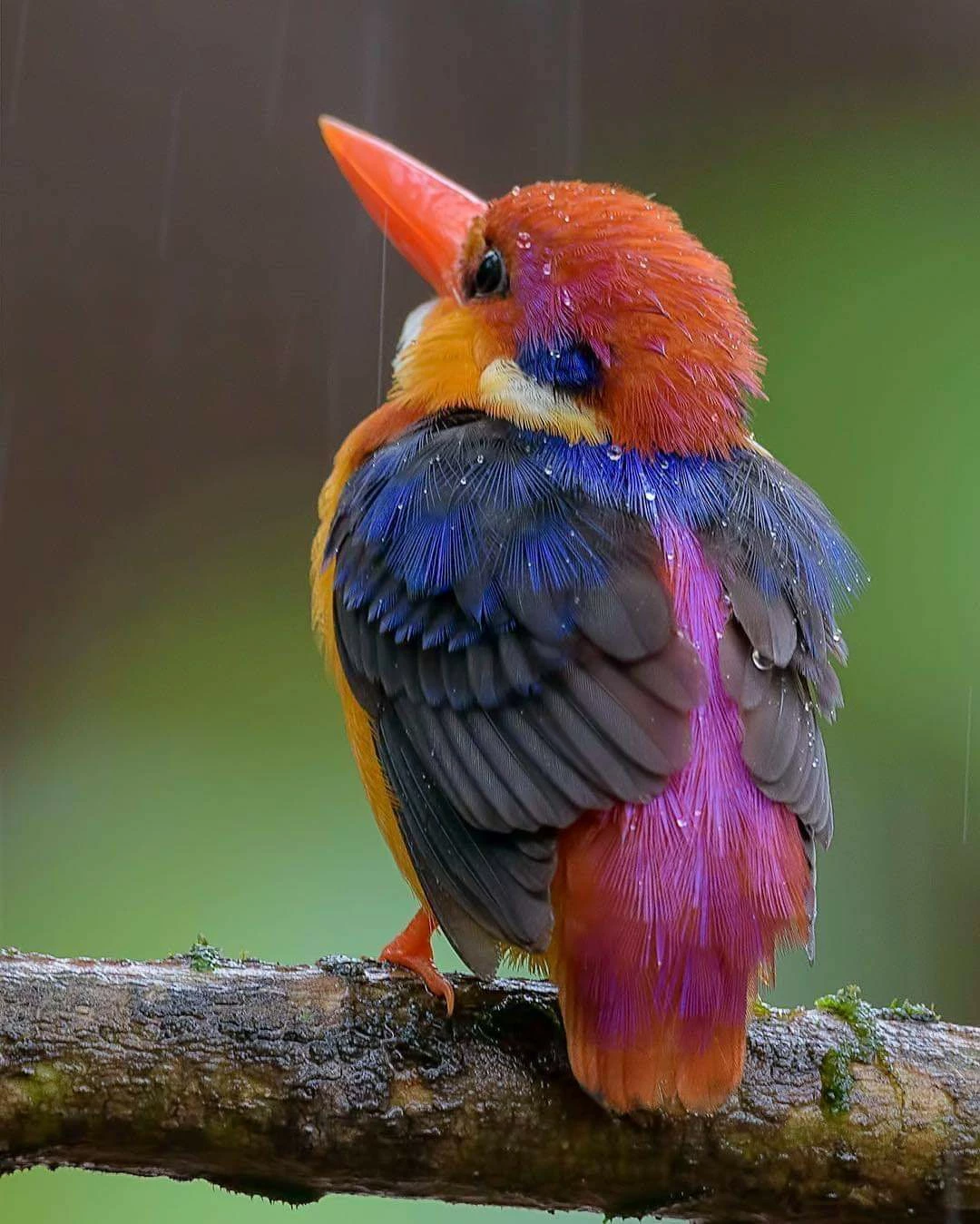
A gorgeous Dwarf Kingfisher enjoying the rain.

Credit: Rahul Belsare Photography.  

The Oriental dwarf kingfisher (Ceyx erithaca), also known as the black-backed kingfisher or three-toed kingfisher, is a species of bird in the family Alcedinidae. A widespread resident of lowland forest, it is endemic across much of the Indian subcontinent and Southeast Asia. It is found in Bangladesh, Bhutan, Brunei, Cambodia, India, Indonesia, Laos, Malaysia, Myanmar, Singapore, Sri Lanka, and Thailand.
 

    129 replies

    DaveMcK
    DaveMcKAuthor
    Community Champion ⭐⭐⭐
    April 29, 2020

    No shock here: the shoebill stork has, well...a bill shaped like a shoe.

    Also of note? Shoebills are abnormally tall, with some individuals reaching heights of over 4 feet. And, unlike many others birds who inhabit similar marsh environments, shoebills are highly effective predators. Their long legs are perfect for traversing shallow waters, where they prey on reptiles, rodents and fish. They are even known to strike against juvenile crocodiles!

    Shoebills use their powerful beaks to grasp and strangle just about anything they encounter, but don’t worry – they don’t prey on humans. Find one in East Africa, where their habitat is concentrated.

    • Given its sharp-edged beak, huge bill and wide gape, the shoebill can hunt large prey, often targeting prey bigger than is taken by other large wading birds. Fish eaten by this species are commonly in the range of 15 to 50 cm (5.9 to 19.7 in) long and weigh around 500 g (1.1 lb), though lungfish of as much as 1 m (3.3 ft) have been attacked. Snakes preyed upon are commonly from 50 to 60 cm (20 to 24 in) long. In the Bangweulu Swamps of Zambia, the main prey items fed to young by the parents were the catfish Clarias gariepinus  (syn. C. mossambicus) and water snakes. In Uganda, lungfish and catfish were mainly fed to the young. The big beak is sometimes used to dig into pond-bottom mud to extract lungfish from their aestivation burrows.

    Posted by Dave the Lighthouse Keeper
    DaveMcK
    DaveMcKAuthor
    Community Champion ⭐⭐⭐
    May 7, 2020

    The colors in Nature are so amazing!


    Posted by Dave the Lighthouse Keeper
    DaveMcK
    DaveMcKAuthor
    Community Champion ⭐⭐⭐
    May 7, 2020
    The Bearded Reedling Is The Roundest Bird We Ever Did See
    Amy Pilkington17 Apr 2020

    In the world of cutesy animal names there is often some confusion over categorization. For example, when is a doggo also a pupper, does that disqualify them from being a pupperino?

    When it comes to the avian world, the main question is thus: "When does a birb become a borb?" At what stage of roundness does a bird's orb-like appearance merit a name change?

    (Future linguists are going to be very confused by this era...)


    I thinking  we can all agree that the bearded reedling qualifies as a borb, though.


    Posted by Dave the Lighthouse Keeper
    DaveMcK
    DaveMcKAuthor
    Community Champion ⭐⭐⭐
    May 10, 2020

    Handsome tanager of lowland and foothill rainforest east of the Andes. Pale blue head contrasts sharply with black breast and back. White belly and blue shoulder patch help separate it from the similar Blue-necked Tanager. Found in open areas with scattered trees and in forest edge (usually not inside forest). Typically does not join mixed-species flocks, though may congregate with other birds at fruiting trees.


    Masked Crimson Tanager

    Small, attractive tanager; bright crimson and black with a black mask and silver bill. Most commonly found in vegetation around oxbow lakes, also sometimes found in nearby forests and along rivers. Sexes similar though females are slightly duller than males. Extensive crimson and black mask easily distinguish this species from other tanagers within its range.

    Forest : Subtropical/Tropical Moist Lowland, Subtropical/Tropical Swamp ; Shrubland : Subtropical/Tropical Moist

    Geographic range

    Posted by Dave the Lighthouse Keeper
    DaveMcK
    DaveMcKAuthor
    Community Champion ⭐⭐⭐
    May 22, 2020

    Baltimore Oriole

    Icterus galbula


    Adult male Baltimore orioles have striking coloration and are easily recognized by the brilliant orange plumage on their undersides and shoulders. The male bird's head and beak are black, and its wings are black with a white bar running across. Females and young males are less striking in appearance, with yellowish-orange and dark gray or brown plumage. Both males and females have long legs and sharp beaks. Baltimore orioles are six to eight inches (15 to 20 centimeters) in length with a wingspan of 9 to 12 inches (23 to 30 centimeters).


    For at least part of the year, Baltimore orioles can be seen in the eastern United States and as far west as Montana. Migrating populations head south during the late summer to early fall and stay in the Southeast U.S., Central America, or South America until April.

    Their preferred habitat is open deciduous woodlands. Baltimore orioles also do quite well in community parks and suburban backyards. They forage in the treetops and commonly build nests in American elms, cottonwoods, and maples. Eggs and young birds are especially vulnerable to predators such as squirrels, owls, large birds, and domestic cats. Adults put up a fight by sounding alarm calls and mobbing predators.


    Baltimore orioles primarily eat insects in the summer, but switch to nectar and fruit in the fall, preferring to eat dark-colored fruits. Some farmers consider them pests—however, Baltimore orioles eat lots of caterpillar larvae that cause damage to trees if their numbers aren’t kept in check, so they do more good than harm.


    Baltimore orioles primarily eat insects in the summer, but switch to nectar and fruit in the fall, preferring to eat dark-colored fruits. Some farmers consider them pests—however, Baltimore orioles eat lots of caterpillar larvae that cause damage to trees if their numbers aren’t kept in check, so they do more good than harm.


    Overall, Baltimore oriole numbers are stable. There is a small decline to their population in the eastern United States, but this is compensated for by an increase in the western part of their range. These birds are threatened by deforestation and pesticide use on trees. They can easily be enticed into a backyard with native fruit and nectar-producing plants or hanging feeders of sugar water.


    Posted by Dave the Lighthouse Keeper
    DaveMcK
    DaveMcKAuthor
    Community Champion ⭐⭐⭐
    May 23, 2020


    The rockhopper penguins are three closely related taxa of crested penguins that have been traditionally treated as a single species and are sometimes split into three species.

    Not all experts agree on the classification of these penguins. Some consider all three as distinct species, some split the western and eastern forms into the southern rockhopper penguin and keep the northern rockhopper as distinct, while other experts consider all three potential varieties to be one species

    Appearance


    Rockhopper penguins are among the smaller species of penguin. After reaching full growth, they are about 20 inches in height. Males and females cannot be distinguished visually, so a DNA test is conducted by taking a feather from the bird to determine its gender. Like many penguins, rockhopper penguins have a white belly and the rest of their body is black. Some characteristics that differentiate them from the other penguins are their red eyes, orange beak, pink webbed feet, and the yellow and black spiky feathers they have on their head Although their yellow and black spiky feathers differentiate them from other penguins, rockhopper penguin chicks do not have them; these feathers develop with age. Their orange beak is initially black, but as the penguins get older, their beaks turn orange. Due to the harsh rocky environment, they cannot slide on their bellies like most penguins, so they hop to get from one place to another.


    Subspecies

    What separates rockhopper penguins into subspecies is their location of reproduction and reproductive behaviors. The difference in mating signals found between the subspecies E. chrysocome (southern) and E. moseleyi (northern) seems to have occurred quickly, thus these behavioral changes are enough to isolate these taxa.

    Southern Rockhopper penguins are split into two subspecies and they are defined by their location of reproduction. The subspecies E. c. filholi (eastern) is known to reproduce in the sub-Antarctic around the Prince Edward Islands, Crozet Islands, Kerguelen Islands, Heard Island, Macquarie Island and Campbell, Auckland and Antipodes Islands. The subspecies E. c. chrysocome, which may be referred to the true southern subspecies, reproduces at offshore islands in southern Chile, Argentina and at the Falkland Islands. The Falkland Islands are known to have one of the largest populations of Southern Rockhopper penguins.

     Habitat and distribution


    Rockhopper penguin skeleton in Manchester Museum

    Northern rockhopper penguins breed in cool temperate climates including on the islands of Gough and Tristan de Cunha in the Atlantic Ocean and St. Paul and Manchester in the Indian Ocean. The southern rockhopper breeds on the Falkland Islands, Argentina and Chile, with breeding colonies around Cape Horn in South America, and Prince Edward, Marion, Crozet, Kerguelen, Heard, Macquarie, Campbell, Auckland and Antipodes Islands in the southern Indian Ocean. Eastern rockhopper penguins are mostly found breeding on Campbell Island in New Zealand, but their numbers have declined immensely.  Rockhopper penguins usually make their habitat in rocky shorelines. They make nests and burrows in tall grasses called tussocks.

    Diet

    The rockhopper penguin's diet consists of krill and small crustaceans, which may include shrimp, crabs, lobsters or crayfish. They also eat squid and myctophid fish. Rockhopper penguins consume more krill than they do fish; their diet changes during migration and as the seasons change. Rockhopper penguins can be at sea for several days while hunting. They can dive up to 330 feet (100 m) for many minutes at a time while searching for prey.


    Reproduction

    Rockhopper penguin with chicks, New Island, Falkland Islands

    Rockhoppers are the most widespread crested penguins.Their range goes from the Antarctic front to the South Atlantic and Indian Oceans. Because of how widespread they are, breeding varies among the penguins in different areas. Northern Penguins begin the mating process two months earlier than Southern ones. Two eggs are usually laid a few days apart during early November in hope that at least one will survive, and the second egg is usually larger than the first. They will use the same nest as they did in previous years as well. Eggs hatch about a month later and the mother will have food for the chick.

    Taxonomy

    There are currently 19 species and six genera of living penguins. The rockhopper penguin has 3 subspecies: Eudyptes filholi, the Eastern Rockhopper; Eudyptes mosleyi, the Northern Rockhopper; and the Eudyptes chrysocome, the Southern Rockhopper. They are separated by their locations of breeding. There are four other species in the genus Eudyptes: E. pachyrhynchus, E. robustus, E. chrysolophus, and E. schlegeli. The three subspecies of the rockhopper penguin are believed to have split up because of latitude and watermasses rather than because of geographic distances. Research suggests that during the early Pleistocene, the Southern Ocean was cold and rockhopper populations from the Atlantic and Indian Oceans remained undifferentiated and lived in the same watermass. The mid-Pleistocene climatic transition was associated with the southward migration of frontal positions and islands became surrounded by subtropical water masses, resulting in a split between Northern and Southern rockhopper penguins. Many advance and retreat cycles of Patagonian icecaps during the late Pleistocene may have created a barrier to gene flow between Southern Pacific and Southern Atlantic populations, causing a split between Southern and Eastern rockhopper populations.


    Posted by Dave the Lighthouse Keeper
    DaveMcK
    DaveMcKAuthor
    Community Champion ⭐⭐⭐
    June 9, 2020


    It is endemic on the mainland and was introduced to Tasmania, where its distinctive pink and grey plumage and its bold and loud behaviour make it a familiar sight in the bushand increasingly in urban areas. It appears to have benefited from the change in the landscape since European colonisation and may be replacing the Major Mitchell's cockatooin parts of its range.

    The term galah is derived from gilaa, a word found in Yuwaalaraay and neighbouring Aboriginal languages.

    Galahs are about 35 cm (14 in) long and weigh 270–350 g (10–12 oz). They have a pale silver to mid-grey back, a pale grey rump, a pink face and chest, and a light pink mobile crest. They have a bone-coloured beak, and the bare skin of the eye rings is carunculated. They have grey legs. The sexes appear similar; however, generally adult birds differ in the colour of the irises; the male has very dark brown (almost black) irises and the female has mid-brown or red irises. The colours of the juveniles are duller than the adults. Juveniles have greyish chests, crowns, and crests, and they have brown irises and whitish bare eye rings, which are not carunculated.


    Posted by Dave the Lighthouse Keeper
    DaveMcK
    DaveMcKAuthor
    Community Champion ⭐⭐⭐
    June 15, 2020

    Albino peacocks are simply stunning (photos)

    Within the plumage of a peacock lies a complex architecture that's continuously changing color. Or so it seems. Though the colors of a peacock are revered, it is just as stunning--if not more so--without them. Often referred to as an albino peacock, it is nothing of the sort. It's technically a white peacock which is a genetic variant of the Indian Blue Peafowl.

    The colors in the feathers of a bird are determined two factors: pigment and structure. For example, the green in some parrots is a result of yellow pigments over blue-reflecting feathers. In the case of a white peacock, its unusual lack-of-color is due to a missing pigment. This missing pigment is dark and absorbs incident light, making diffracted and interference light visible (i.e. common peacocks). The effect is similar to that of oil on water.

    Pigment colorization in birds comes from three different groups: melanins, carotenoids, and porphyrines. Melanins occur as tiny specks of color in both the skin and feathers, and ranges from the darkest black to pale yellows. Carotenoids are plant-based and are acquired only by eating plants or by eating something that ate a plant. They produce bright yellows and brilliant oranges. The last pigment group, Porphyrins, produces a range of colors including pink, browns, reds, and greens.

    But feather structure is as important to color as pigment. Each feather consists of thousands of flat branches, each with minuscule bowl-shaped indentations. At the bottom of each indentation is a lamellae (thin plate-like layers), that acts like a prism, splitting light. It's the same principle for butterflies and hummingbirds.

    Posted by Dave the Lighthouse Keeper
    LydiaN586309
    Community Champion ⭐
    June 19, 2020

    WHEN IT COMES TO OWLS,

    THE....

    EYES.....

    HAVE....

    IT...

    WHETHER AWAKE OR ASLEEP!

    DaveMcK
    DaveMcKAuthor
    Community Champion ⭐⭐⭐
    June 21, 2020


    The plum-headed parakeet (Psittacula cyanocephala) is a parakeet in the family Psittacidae. It is endemic to the Indian Subcontinent and was once thought to be conspecific with the blossom-headed parakeet (Psittacula roseata) but was later elevated to a full species. Plum-headed parakeets are found in flocks, the males having a pinkish purple head and the females, a grey head. They fly swiftly with twists and turns accompanied by their distinctive calls.

    In 1760 the French zoologist Mathurin Jacques Brisson included a description of the plum-headed parakeet in his Ornithologie based on a specimen collected in India. He used the French name Le perruche a teste bleu and the Latin name Psittaca cyanocephalos.[2] Although Brisson coined Latin names, these do not conform to the binomial system and are not recognised by the International Commission on Zoological Nomenclature.[3] When in 1766 the Swedish naturalist Carl Linnaeusupdated his Systema Naturae for the twelfth editionhe added 240 species that had been previously described by Brisson.[3] One of these was the plum-headed parakeet. Linnaeus included a terse description, coined the binomial name Psittacus cyanocephalus and cited Brisson's work.[4] The specific name cyanocephalus/cyanocephalacombines the Ancient Greek words kuanos "dark-blue" and -kephalos "-headed".[5] This species is now placed in the genus Psittacula which was introduced by the French naturalist Georges Cuvierin 1800.


    The plum-headed parakeet is a mainly green parrot, 33 cm long with a tail up to 22 cm. The male has a red head which shades to purple-blue on the back of the crown, nape and cheeks while the female has blueish-gray head. There is a narrow black neck collar with verdigris below on the nape and a black chin stripe that extends from the lower mandible. There is a red shoulder patch and the rump and tail are bluish-green, the latter tipped white. The upper mandible is orangish-yellow, and the lower mandible is dark. The female has a dull bluish grey head and lacks the black and verdigris collar which is replaced by yellow. The upper-mandible is corn-yellow and there is no black chin stripe or red shoulder patch. Immature birds have a green head and both mandibles are yellowish. The dark head is acquired after a year. The delicate bluish red appearance resembling the bloom of a peach is produced by a combination of blue from the optical effects produced by the rami of the feather and a red pigment in the barbules.

    Some authors have considered the species to have two subspecies, the nominate from peninsular India (type locality restricted to Gingee) and the population from the foothills of the Himalayas as bengalensis on the basis of the colour of the head in the male which is more red and less blue.[ Newer works consider the species to be monotypic.[7]

    The different head colour and the white tip to the tail distinguish this species from the similar blossom-headed parakeet (Psittacula roseata). The shoulder patch is maroon coloured and the shorter tail is tipped yellow in P. roseata.


    Posted by Dave the Lighthouse Keeper
    LydiaN586309
    Community Champion ⭐
    June 23, 2020

    Over this past weekend, I was visited by three very small birds.  I had never seen such birds before and after watching them with delight as they ate from my backyard bird feeders, I took to Google to find out just who had graced my everyday world of birds.


    I tapped into the search engine the following description: 

    Very small bird, smaller than a sparrow with a red head and belly and brown back and wings.  And as soon as I clicked on search, up popped several pictures of the little birds I'd seen and their name--The Red-Bellied Finch.


    Small, beautiful, and just as I described.  They looked like a cross between a robin and a sparrow and maybe just a hint of cardinal with that red head and all.


    I love bird watching from the comfort of my family room couch.

    Lydia