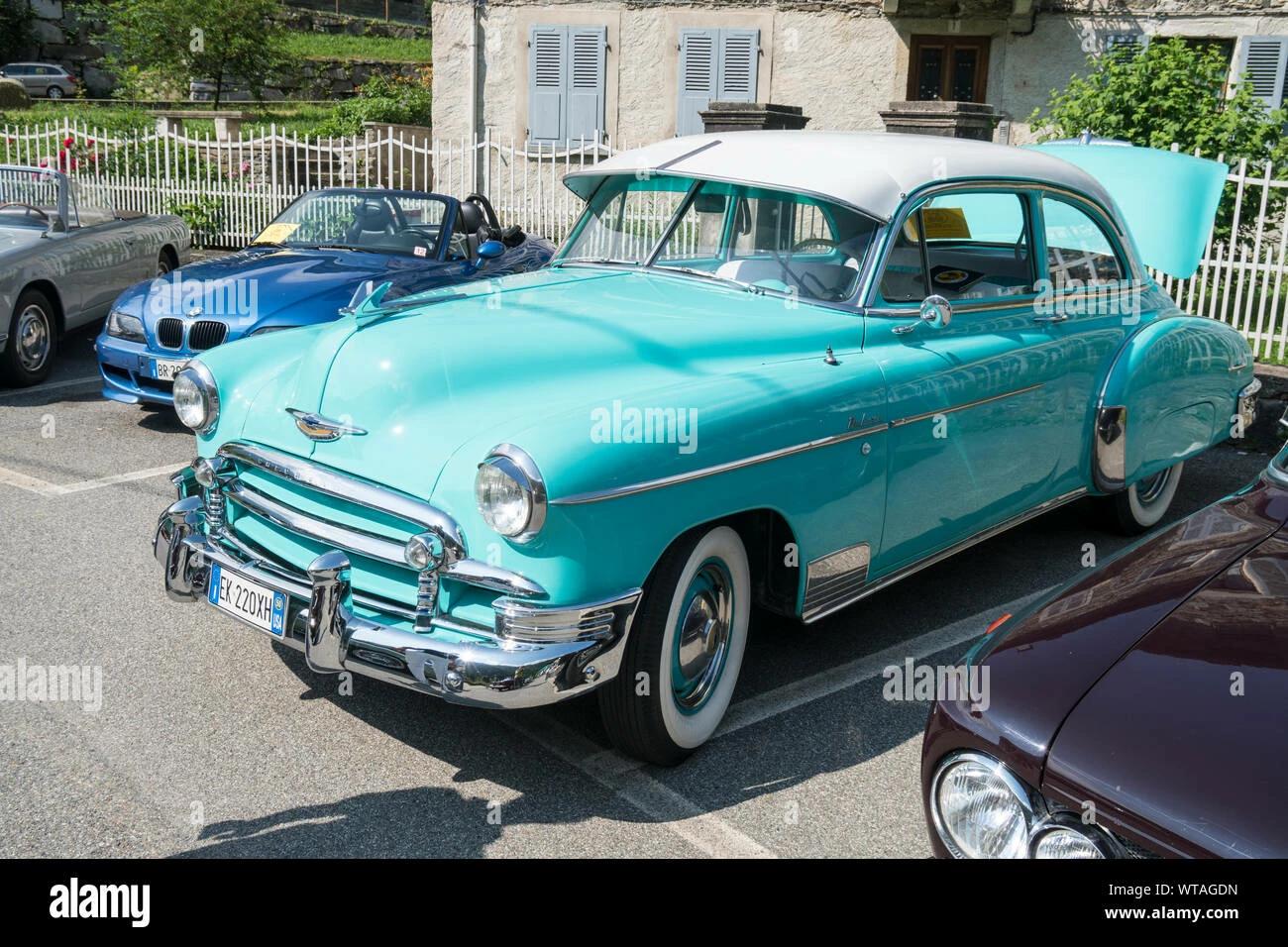
New topic about cars you may have owned or you family members had in the past. You should be able to download a photo if you choose to post on this topic.
Also loved the Olds 442...like this 1971 ....which was the beginning of the end of performance – for the 442 and every other muscle car, as well....with GM’s new requirement that all engines run unleaded gas
Despite the falling sales numbers, Oldsmobile could take comfort in the fact that sales of every other muscle car were also in decline for the year. In addition, the 442 was still seen as one of the best muscle cars on the road due to its combination of performance and drivability. Motor Trend praised the car at the time by saying that, “There’s always been something special about 4-4-2s. They seemed to be the subtle man’s GTO…” as the original 442 was inspired by the GTO. It never had the sales number of that car (or, indeed, most of the muscle cars), but it also had staying power. In fact, it would be the only muscle car that would survive into the 1980s.
The Chevrolet Bel Air, especially its third generation design, has been considered an icon of the 1950s. Well-maintained and preserved examples are highly sought after by car collectors and enthusiasts.
The 1964 Plymouth models were great sellers for the Chrysler Corporation, creating huge profits and moving the nameplate from fifth to fourth place overall among US auto brands.
I always thought that the 1964 Plymouth models were great looking designs and very popular among auto racing fans. Their high performance also led to great success on the track.
We purchased one like the one in the photos from my folks in the Spring of 1967 when I graduated from college.
When I was drafted it worked out well for
Mary now had a car to get around in her Senior year of college and do her practice teaching for her teaching degree.
For the 1966 model year, the first for the Bronco, the Blue Oval produced 23,776 units at the Michigan Assembly Plant.
It seemed that during the 1960s, the late Lee Iacocca had the golden touch. After the monumental success of the Mustang, he gave product approval for the first Ford Bronco, and the model repaid his faith by becoming an initial sales success.
The Volkswagen Beetle—officially the Volkswagen Type 1, informally in German der Käfer (meaning "beetle"), in parts of the English-speaking world the Bug,[7] and known by many other nicknames in other languages—is a two-door, rear-engine economy car, intended for five occupants (later, Beetles were restricted to four people in some countries),
that was manufactured and marketed by German automaker Volkswagen (VW) from 1938 until 2003.
I'm sure there are many here that owned a VW Type 1 during your younger years. It was a very popular vehicle among US military personnel when I was stationed in Germany in 1969. It was very easy to maintain. There were old junkers available in the back lots of most Kasernes to rob parts from.
There were many " Bugs " on campus when I was in college during the mid 1960s.
This is a very special car in my life in that one of them was owned by the older brother of one of my best friends in high school. It was the envy of several of the students at my high school.
The Ford Fairlane 500 Skyliner is a two-door full-sizeretractable hardtop convertible, manufactured and marketed by Ford Motor Company for model years 1957–1959. For the model year 1959, the name changed to Ford Fairlane 500 Galaxie Skyliner shortly after production began (also illustrated as such in the brochure but described only as "Galaxy" in the related text.). The retractable roof mechanism, marketed as the "Hide-Away Hardtop", [2] was unique to Ford-branded products, and was not offered on Continental, Lincoln, Mercury, or Edsel branded vehicles. A total of 48,394 were manufactured.
A classic car is an older car, typically 25 years or older, though definitions vary. The common theme is of an older car of historical interest to be collectible and tend to be restored rather than scrapped. Classic cars are a subset of a broader category of "collector cars".
The 1953 Kaiser Manhattan was offered as a four-door sedan with seating for six and priced at $2,650. The two-door club sedan was priced at $2,600 and the Traveler Utility Sedan listed at $2,750. Approximately 2,342 examples were club sedans and 18,603 were sedans. The circa-20,945 examples of the Manhattan accounted for approximately sixty-seven percent of Kaiser's total production in 1953.